
 • If you've been following Matt Logelin's blog, you may have done the math and figured out that his adorable daughter Madeline is just two days older than our Benjamin. And now she's standing! Way to go, Madeline! (No pressure, Ben.) But that's not the real reason to check out his latest post. I'm just so impressed at how people who are strangers to each other have come together to fund this worthwhile charity in memory of Matt's wife, Liz (who died completely unexpectedly the day after Madeline was born, if you haven't been following his story).
Showing posts with label world. Show all posts
Showing posts with label world. Show all posts
Friday, December 12, 2008
cool stuff
• Snow in New Orleans — wow! Check out a couple of cool pictures on Ray Mikell's blog. He's the friend who sent me a couple of funky wigs last summer.
 • If you've been following Matt Logelin's blog, you may have done the math and figured out that his adorable daughter Madeline is just two days older than our Benjamin. And now she's standing! Way to go, Madeline! (No pressure, Ben.) But that's not the real reason to check out his latest post. I'm just so impressed at how people who are strangers to each other have come together to fund this worthwhile charity in memory of Matt's wife, Liz (who died completely unexpectedly the day after Madeline was born, if you haven't been following his story).
• If you've been following Matt Logelin's blog, you may have done the math and figured out that his adorable daughter Madeline is just two days older than our Benjamin. And now she's standing! Way to go, Madeline! (No pressure, Ben.) But that's not the real reason to check out his latest post. I'm just so impressed at how people who are strangers to each other have come together to fund this worthwhile charity in memory of Matt's wife, Liz (who died completely unexpectedly the day after Madeline was born, if you haven't been following his story).

Thursday, November 27, 2008
sex at the ball game
While I'm writing about news items, did you hear about the man and woman who got caught having sex in a public restroom at the Minnesota-Iowa game?
The latest is that this woman — who is 38 and married — says she has no memory of the event because she'd drunk too much wine before the game. She didn't know the man in question. I am trying to imagine the chain of events that must have led her and a stranger 12 years her junior to get it on in a restroom stall, loudly enough that people gathered outside the door to cheer them on. If it had happened at a private party or fraternity back room, she'd have had to nurse the dirty little secret on her own. As it is, she says her life has been ruined. She's been fired from her job, and I can only imagine what that ride back to Iowa with her husband must have been like. How humiliating. How sad. And yet ... how titillating, the stories of other people's lusts and frailties. There's a reason this is the most-e-mailed story on the Pioneer Press Web site today. Probably the same reason I posted it on my blog.
The latest is that this woman — who is 38 and married — says she has no memory of the event because she'd drunk too much wine before the game. She didn't know the man in question. I am trying to imagine the chain of events that must have led her and a stranger 12 years her junior to get it on in a restroom stall, loudly enough that people gathered outside the door to cheer them on. If it had happened at a private party or fraternity back room, she'd have had to nurse the dirty little secret on her own. As it is, she says her life has been ruined. She's been fired from her job, and I can only imagine what that ride back to Iowa with her husband must have been like. How humiliating. How sad. And yet ... how titillating, the stories of other people's lusts and frailties. There's a reason this is the most-e-mailed story on the Pioneer Press Web site today. Probably the same reason I posted it on my blog.
Wednesday, November 5, 2008
look how far we've come
 When I saw Barack Obama and his family walk onto the stage at Grant Park last night, and I watched his adorable girls waving at the crowd, my mind flashed back to images like this one ...
 ... and I was overcome with gratitude for how far we've come in this country. I am so proud.
One giant step toward unity. It fuels my hope that we can accomplish even more.
Tuesday, November 4, 2008

Friday, September 19, 2008
update
Today's paper carried this good news about Sandra Cooley, about whom I wrote after reading of her plight on Sunday. I'm so happy that she has gotten through this bureaucratic nightmare and received official citizenship — which means she can now receive her Social Security disability payments. Ruben Rosario's update says:
Cooley, 59, is battling breast cancer that has spread to other organs. She underwent gamma-knife surgery this week to shrink five tumors in her brain. The monthly $422 in held-up benefits would help defray out-of-pocket medical expenses.It sounds like at least one senator got involved in the case, maybe more. Now her family can concentrate on what's really important.
Sunday, September 14, 2008
this makes me seriously angry
Maybe this hits home because Sandra Cooley has cancer (originally breast cancer, metastasized to her lungs, shoulder, hip, liver, adrenal glands and now brain - whew). Maybe it hits home because I have a soft spot for the underdog. Whatever the reason, this piece by Pioneer Press columnist Ruben Rosario in today's paper has me steamed up and wanting to fight for this woman. She has qualified for Social Security benefits but hasn't seen any of the money yet. Why not? Because of "what can only be described in a family newspaper as asinine lunacy because of a decision her dirt-poor parents made six decades ago," as Ruben Rosario puts it.
The Department of Homeland Security is questioning her U.S. citizenship because she hasn't supplied enough documentation to prove she was born of United States residents and has lived here all her life, despite having been born a few miles across the Canadian border. It's a long story ... you'd do well to read it all, but here are some excerpts:
Surely there must be something we can do to help her. I think it would be helpful if our congressional representatives from Minnesota got involved; so, to that effect, here is some information on how to contact Sen. Norm Coleman (click here), Sen. Amy Klobuchar (click here), and Rep. John Kline (click here), who represents the district where the family lives.
And while I'm not going to post Bill and Sandra Cooley's address here, I'll note that you can look it up on WhitePages.com, under William Cooley of Waconia, Minnesota ... if you feel moved to help them. I know I do.
The Department of Homeland Security is questioning her U.S. citizenship because she hasn't supplied enough documentation to prove she was born of United States residents and has lived here all her life, despite having been born a few miles across the Canadian border. It's a long story ... you'd do well to read it all, but here are some excerpts:
Sandra was born two years after Donald Gibney returned from serving seven years as a mechanic machinist on various Navy submarines that saw combat during World War II. One of the subs was the USS Bluegill.
The total bill for the seven-day stay at the hospital was little more than $58 and change. In those days, $3 — a substantial sum for such a family — would enable hospital officials to convert Sandra Cooley's birth certificate to reflect that she was the child of a U.S.-born citizen.
Her financially strapped parents decided not to pay and took their newborn home. Four other children — two before Sandra Cooley and two after — would be born in similar fashion, driven to the same Canadian hospital. Over the years, all but Sandra Cooley were able, without much problem, to successfully have their citizenship status changed.
But as Sandra's husband, Bill, notes, those approvals took place before the terrorist attacks of Sept. 11, 2001.
"I think that's what is going on here,'' he said.
• • •
A letter dated July 18 asked the couple to submit "a clear and legible copy of your father's Form DD-214. Discharge and Separation documents.''And on it goes ... it is the most amazing ridiculous, unfair example of government bureaucracy I have seen in a long time. Is this woman a security threat to the United States? Is she a person who doesn't deserve to get Social Security benefits? Is she trying to milk the system for some selfish, personal gain? No, no and no.
The agency also noted that it needed evidence under Immigration and Naturalization Act Section 301 to prove her father was a U.S. resident at least 10 years before her birth.
They sent relatives' documents, including her late father's birth certificate, military records and a 1972 affidavit signed by him and properly notarized saying he was born and lived here.
Not good enough, the agency wrote back July 29.
It seems the family has not submitted enough proof.
"The Service notes you previously submitted copies of your grammar school report cards as evidence of your continued residency in the Untied [sic] States,'' the July 29 letter to the Cooleys states. "While noted, these documents do not establish 2 years of continued physical presence between the ages of 14 and 28.''
Short of the seven days she spent as a newborn at the Canadian hospital, Cooley has lived here all this time.
Not good enough.
The family also was told in one of the letters that the agency still needs proof not only that Sandra Cooley's father was a U.S. resident 10 years before her birth but also that he was 12 or older before that time.
Surely there must be something we can do to help her. I think it would be helpful if our congressional representatives from Minnesota got involved; so, to that effect, here is some information on how to contact Sen. Norm Coleman (click here), Sen. Amy Klobuchar (click here), and Rep. John Kline (click here), who represents the district where the family lives.
And while I'm not going to post Bill and Sandra Cooley's address here, I'll note that you can look it up on WhitePages.com, under William Cooley of Waconia, Minnesota ... if you feel moved to help them. I know I do.
Sunday, July 6, 2008
don't know much about history
I have never liked the Fourth of July. I like fireworks, but I don't like pushing through crowds to get a good view of them. I don't feel particularly comfortable at pool parties. I didn't grow up in a family that barbecues or goes to "the lake." (We were in Oregon.) I see the Fourth as a holiday designed for extraverts, not me.
That's why the one and only thing I did this year to observe the holiday was the one thing that comes naturally to reserved introverts: I read the Declaration of Independence. And this time, I really read it and thought about it. I figured, it's probably one of those things I should do in my lifetime, so I might as well do it now. (It didn't hurt that it was a nice day on the patio!) My journalist mind kicked into gear as I tried to translate the 232-year-old text into simpler language (though Jefferson's own is beautiful enough), and when I got to the long laundry list of complaints about the king of England, I found myself wishing I'd paid more attention in my high school history classes. I wanted details.
"For cutting off our Trade with all parts of the world ..."
"For transporting us beyond Seas to be tried for pretended offences ..."
"He has constrained our fellow Citizens taken Captive on the high Seas to bear Arms against their Country, to become the executioners of their friends and Brethren, or to fall themselves by their Hands."
Wow. I knew the colonists didn't like King George, but I guess I had never grasped the extent of the things he had done to try to suppress the colonies. I would love to know the specifics of what really happened to spur all those complaints. It would make a good HBO or Showtime miniseries, I think — I envision something sexy and violent and quasi-historical along the lines of "The Tudors."
I also found myself wondering what the British side of the story was. The Declaration of Independence is written in a highly persuasive rhetorical fashion, but what if an equally persuasive Brit were to write a rebuttal? What would it say? (Oh, I'm sure it's been done, and I am just not aware of it.) Benjamin Franklin had lived in London for a while and was an admirer of English royalty, I think. Did he have trouble signing the declaration?
And then, as I perused the list of names of men who had signed the document, I saw a familiar one from New Hampshire: Josiah Bartlett. The same name as the fictional president on The West Wing, who also was from New Hampshire (but spelled his name with only one t). How did I not know that before?
That's why the one and only thing I did this year to observe the holiday was the one thing that comes naturally to reserved introverts: I read the Declaration of Independence. And this time, I really read it and thought about it. I figured, it's probably one of those things I should do in my lifetime, so I might as well do it now. (It didn't hurt that it was a nice day on the patio!) My journalist mind kicked into gear as I tried to translate the 232-year-old text into simpler language (though Jefferson's own is beautiful enough), and when I got to the long laundry list of complaints about the king of England, I found myself wishing I'd paid more attention in my high school history classes. I wanted details.
"For cutting off our Trade with all parts of the world ..."
"For transporting us beyond Seas to be tried for pretended offences ..."
"He has constrained our fellow Citizens taken Captive on the high Seas to bear Arms against their Country, to become the executioners of their friends and Brethren, or to fall themselves by their Hands."
Wow. I knew the colonists didn't like King George, but I guess I had never grasped the extent of the things he had done to try to suppress the colonies. I would love to know the specifics of what really happened to spur all those complaints. It would make a good HBO or Showtime miniseries, I think — I envision something sexy and violent and quasi-historical along the lines of "The Tudors."
I also found myself wondering what the British side of the story was. The Declaration of Independence is written in a highly persuasive rhetorical fashion, but what if an equally persuasive Brit were to write a rebuttal? What would it say? (Oh, I'm sure it's been done, and I am just not aware of it.) Benjamin Franklin had lived in London for a while and was an admirer of English royalty, I think. Did he have trouble signing the declaration?
And then, as I perused the list of names of men who had signed the document, I saw a familiar one from New Hampshire: Josiah Bartlett. The same name as the fictional president on The West Wing, who also was from New Hampshire (but spelled his name with only one t). How did I not know that before?
Thursday, February 21, 2008
two boys
 In the pictures, you can tell they are brothers — they look so much alike. Their light-brown hair is thin and straight. Their mouths are big and wide, and I can just picture how great their grins are when they show their teeth. Their chins have matching little clefts, and I can see mischief behind those lively eyes. They remind me so much of how I imagine Daniel and his brother might look at that age. Maybe that's why the deaths of these two little boys, Hunter and Jesse Javens, ages 9 and 13, of Cottonwood, Minn., have stayed in my mind all morning. I can't stop looking at their pictures on the front page of the newspaper, along with the other two children who were killed in the school bus crash in southern Minnesota.
  I don't mean to minimize the losses of the other two children in dwelling on the Javens brothers — not at all. All four deaths are tragic, made even more senseless by the reports that the woman who sideswiped the bus, causing the accident, apparently was not in possession of a valid driver's license and wasn't supposed to be on the road. It's just that my mother's heart identifies in a particular way with the mother of the two brothers with the hanging-down hair and big mouths and eyes so full of life. It's just too easy to imagine it being my boys, and that fills my heart with sadness.
 It's so easy for me to get caught up in my own world of "What if I die of cancer before I see my boys grow up," but this reminds me that you never know when or where grief and tragedy will sneak up on you. I know there are people in this world, including friends, who know this all too well — who have had loved ones jerked from life so unexpectedly, whose own lives will never be the same because of it. It has never happened to me, and knowing that people I care about are dealing with the real thing every single day, it feels a little strange writing about sadness stemming from something that happened to people I don't even know. But the imagination is a powerful thing, and this is where mine has been today.
Tuesday, October 23, 2007
in today's news: my cancer surgeon
 Today's New York Times (and many other media outlets in the country) ran this article (or some version of it):
 "More women with breast cancer are choosing to have their healthy breast surgically removed along with their affected breast, a new study has found. Almost 5 percent of patients decided to have the radical procedure in 2003, up from just under 2 percent in 1998."The study's lead author? Dr. Todd Tuttle, the chief of surgical oncology at the University of Minnesota Medical School, also known on this blog as Dr. T, who spent six hours removing my sarcoma six and a half weeks ago ... one of the few people who's ever seen the inside of my body!
Also in today's NYT, this article about co-sleeping — and it's not all negative, either! Here's part of it:
In most of the world, sleeping next to your child is a necessity: families of limited means live in cramped quarters. But in the affluent West, the practice is widely frowned on, not just by grandparents and friends, but by the medical community at large.I've never really felt judged negatively for sleeping with Daniel (though perhaps I choose to be deliberately oblivious to judgmental attitudes), nor do I see him (or us) as being needy. I see him as a normal, sensitive baby who prefers the security of snuggling with his parents to being alone at night, and whose parents don't believe in crying it out. I was glad to see an article that didn't simply present fear-mongering opinions about co-sleeping dangers or make co-sleeping parents out to be wierdo hippies!
Still, it is far more common than many people think. Nearly 13 percent of parents in the United States slept with their infants in 2000, up from 5.5 percent in 1993, according to a report last month in the journal Infant and Child Development. Countless children start the night in their own beds, only to wake up a few hours later and pad into their parents’ bedrooms, crawling into the bed or curling up nearby on the floor.
Ask parents if they sleep with their kids, and most will say no. But there is evidence that the prevalence of bed sharing is far greater than reported. Many parents are “closet co-sleepers,” fearful of disapproval if anyone finds out, notes James J. McKenna, professor of anthropology and director of the Mother-Baby Behavioral Sleep Laboratory at the University of Notre Dame.
“They’re tired of being censured or criticized,” Dr. McKenna said. “It’s not just that their babies are being judged negatively for not being a good baby compared to the baby who sleeps by himself, but they’re being judged badly for having these babies and being needy.”
Wednesday, August 1, 2007
horrible
Our hearts and prayers go out to the people who were on the I-35 bridge tonight when it collapsed. What an awful, awful tragedy. I can hardly believe something like this could happen here. We are OK; none of us was on that stretch of highway today. I appreciate the many e-mails we have received from friends and family checking on us.
Tuesday, June 19, 2007
hooray for rfk (jr.)
Robert F. Kennedy Jr. is someone people might actually listen to in this whole mercury-autism-vaccine debate, which is apparently in a federal "vaccine court" right now. Then again, I thought Al Gore might change people's minds about global warming, but if they didn't like him to begin with, they probably won't listen to him now. At any rate, Kennedy wrote this article for The Huffington Post. It starts like this:
On a related note, Daniel had his nine-month well-baby visit a couple of weeks ago. We saw a new doctor who listened to me — actually listened — when I told her we are delaying some of Daniel's shots and want to forego some of the others, at least until much later. (Like chicken pox. I'd be happy if he could catch chicken pox on his own and develop a natural immunity, but if he's not immune by the time he enters adulthood, a case of chicken pox would be a lot more troublesome, so I'd want him to get the shot in his early teens if he doesn't bring the pox upon himself. :) And hepatitis B. Why on earth do they give that to babies, when it's mostly transmitted through sex and IV drug use? And that was one of the shots that used to be preserved with thimerisol.)
Whether or not the doctor agreed with me, what she said to me with complete openness was, "I don't want you to give him any shots if you're not comfortable doing it. It's not good for a doctor-patient relationship if you feel pressured into doing it." What a breath of fresh air compared to the previous doctor, who basically made me feel like a floundering fool — and very pressured.
I did get Daniel one shot at his nine-month visit: DTAP, the combined one for diptheria, tetanus and pertussis (whooping cough). I'd been going back and forth all week about whether to do it now or later, but I decided to go ahead. It was his third DTAP shot, which the doctor said completes the primary series, so he should be covered through the scariest age for whooping cough. (Well, as much as he can be; that part of the vaccine doesn't have the highest success rate.) And tetanus? I know it's rare, but the thought of the actual disease scares me immensely. It sounds horrible. It didn't help that we were at a birthday party at a park a couple of weeks ago, and when I sat on the grass next to Daniel to eat my cake, I put my hand down next to a big, thick, rusty nail. Eesh. At any rate, if he splits his lip open again, at least I don't have to panic, and that emotional reassurance is good for something!
So, I left feeling good about the doctor, better about the clinic, and great about our decision to keep going on a selective and delayed vaccination schedule — and keep researching. And Daniel handled the shot really well, and he got plenty of cuddling from his mom and dad afterward.
Oh, and Daniel's vital stats: As of June 1, he measured 29 and a half inches (90th or 95th percentile) and weighed 18 pounds, 5 ounces (25th percentile). What a big boy! I love him so much.
The poisonous public attacks on Katie Wright this week--for revealing that her autistic son Christian (grandson of NBC Chair Bob Wright), has recovered significant function after chelation treatments to remove mercury -- surprised many observers unfamiliar with the acrimonious debate over the mercury-based vaccine preservative Thimerosal. But the patronizing attacks on the mothers of autistic children who have organized to oppose this brain-killing poison is one of the most persistent tactics employed by those defending Thimerosal against the barrage of scientific evidence linking it to the epidemic of pediatric neurological disorders, including autism. Mothers of autistics are routinely dismissed as irrational, hysterical, or as a newspaper editor told me last week, "desperate to find the reason for their children's illnesses," and therefore, overwrought and disconnected.Good for him. I hope people are listening.
On a related note, Daniel had his nine-month well-baby visit a couple of weeks ago. We saw a new doctor who listened to me — actually listened — when I told her we are delaying some of Daniel's shots and want to forego some of the others, at least until much later. (Like chicken pox. I'd be happy if he could catch chicken pox on his own and develop a natural immunity, but if he's not immune by the time he enters adulthood, a case of chicken pox would be a lot more troublesome, so I'd want him to get the shot in his early teens if he doesn't bring the pox upon himself. :) And hepatitis B. Why on earth do they give that to babies, when it's mostly transmitted through sex and IV drug use? And that was one of the shots that used to be preserved with thimerisol.)
Whether or not the doctor agreed with me, what she said to me with complete openness was, "I don't want you to give him any shots if you're not comfortable doing it. It's not good for a doctor-patient relationship if you feel pressured into doing it." What a breath of fresh air compared to the previous doctor, who basically made me feel like a floundering fool — and very pressured.
I did get Daniel one shot at his nine-month visit: DTAP, the combined one for diptheria, tetanus and pertussis (whooping cough). I'd been going back and forth all week about whether to do it now or later, but I decided to go ahead. It was his third DTAP shot, which the doctor said completes the primary series, so he should be covered through the scariest age for whooping cough. (Well, as much as he can be; that part of the vaccine doesn't have the highest success rate.) And tetanus? I know it's rare, but the thought of the actual disease scares me immensely. It sounds horrible. It didn't help that we were at a birthday party at a park a couple of weeks ago, and when I sat on the grass next to Daniel to eat my cake, I put my hand down next to a big, thick, rusty nail. Eesh. At any rate, if he splits his lip open again, at least I don't have to panic, and that emotional reassurance is good for something!
So, I left feeling good about the doctor, better about the clinic, and great about our decision to keep going on a selective and delayed vaccination schedule — and keep researching. And Daniel handled the shot really well, and he got plenty of cuddling from his mom and dad afterward.
Oh, and Daniel's vital stats: As of June 1, he measured 29 and a half inches (90th or 95th percentile) and weighed 18 pounds, 5 ounces (25th percentile). What a big boy! I love him so much.
Friday, April 27, 2007
marriage and divorce
At times, I am reminded that marriage is such a leap of faith. I read things like this tidbit in the Star Tribune, written by the relationship reporter, Gail Rosenblum:
And then, last week, this, from the new book by Krista Tippett, host of NPR's Speaking of Faith:
Reading these experiences by two different women, I can't help wondering: What is it that makes or breaks a marriage? Why did these women's marriages break apart when people like my parents, who have certainly faced their share of hardships, are still together and going strong? I am sure few people ever enter marriage lightly, expecting it to end in divorce. Yet we all know the statistics. And sometimes, the people who end up getting divorced surprise me. A reporter I used to work with in Mississippi had what I imagined to be the perfect marriage, so I was shocked, totally, when I heard they had split. But we cannot know what goes on under the surface. Marriage works in mysterious ways.
For some couples, the culprit is something obvious, like money or religion or sex or addiction or adultry. Some say they are no longer "in love." (Though doesn't the nature of love change over time, and don't we learn that love is also an action?) Some say they grow apart, interests and outlooks diverging until there is no glue left to hold them together. For others, it seems, it is something insidious that lurks beneath the surface for years until it's too late. Gail Rosenblum described it as a "low rumble" that she and her husband were able to ignore. Krista Tippett described it as a sort of "brokenness." I wonder if the seeds of the disrepair began as something so small that they didn't even notice until the seeds took root and grew into something uglier, like the weedy plants that try to worm their way up through our patio cracks every year.
I am really happy with the marriage that Stephen and I have built over the past four years. I think it rests on strong foundations. But we aren't relationship experts, and we aren't saints — and we aren't perfect. Occasionally we disagree, we argue, we accidentally hurt each other's feelings. We make up and talk through it, although sometimes it takes me a few days — several levels of making up — to fully heal and feel like we are back to normal. (I am writing from such a place, though we are mostly back to fine.) And whenever I read accounts like these, it scares me a little. It gets me (over)analyzing the things that occasionally disrupt the good mood of our marriage and wondering if we will look back on them later as the seeds of something larger. Yet I have to remember: My parents argue, too, and every couple has their unique share of conflicts, and the relationship experts say it's how we work out the conflicts that sets the tone of our marriage as much as anything else.
Having a baby requires us to be even more intentional about our relationship, too. It's so easy to fall into our roles as parenting partners and let our other roles — friend, lover, husband, wife, supporter, movie date — take the back seat. It's a balancing act, an adjustment, that Stephen and I are still figuring out as we go along, still early in this journey of parenthood. In that respect, I can see, as Gail Rosenblum points out, how a couple with several children could get along for years without nurturing their marriage and not notice it cracking at the seams.
Of course, I share these stories with Stephen, too, and we talk about them and agree that it's essential to nurture our relationship (even if it means leaving Daniel with babysitters at the height of his stranger anxiety — so hard!) and address any potential "termites" in our marriage before they chew up the foundation. And I think we do a good job of managing conflicts as they arise — baby and all. And yet, and yet ... we are only human, and this thing called marriage seems like such a mystery sometimes — I love the way Krista Tippett describes it as a dare from God. Such a leap of faith, requiring much optimism and not to be taken for granted.
For years, I've covered the unmistakable churnings and changes in the American family -- from nuclear to blended, from closed to open to international adoptions, interfaith and intercultural marriage, paternity leave and at-home dads, grandparents raising grandchildren, adult children parenting their parents, GenXers opting out of legal unions, gay couples trying to opt in, and the remarkable reality of 70-, even 80-year wedding anniversaries.
All of it fascinated me. None of it affected me personally, or so I thought. The noise under our own roof began years ago, a low rumble we ignored effectively. Kids keep couples busy. Jobs keep couples busy. Societal and familial pressures keep couples busy, and married, too. But as building-better-marriage books and, later, books about a new kind of divorce calling for collaboration and co-parenting crossed my desk for review, I read them in a different light.
As our children grew older and the rumble grew to a roar, we panicked and leaped into a painful and painstaking search for answers to so many questions. Did we just suffer from lousy communication? Was our struggle acute and temporary, or chronic? As one therapist suggested, "Has the milk been out too long?" With no affairs, abuse or addiction to report, did we expect too much? Yet, how long can two good people run on emotional empty before somebody tries to fill up elsewhere? And what about our precious children?
Those who charge that couples like us take marriage vows too lightly, especially when kids are involved, are dead wrong. The reality of stepping out, of handing back the dream and, most horribly, destroying our children, threatened to undo us many times. In the end, we decided that staying was riskier than leaving. So we moved slowly forward, always with an eye on our kids.
And then, last week, this, from the new book by Krista Tippett, host of NPR's Speaking of Faith:
Sometimes I have had a feeling — and I had this in my marriage to Michael — that God throws out the occasional wild card, almost a dare — try this if you will; I will bless it; it is rich with possibility; it will not be easy. And in the case of my marriage, Michael and I failed to carry it through to the end. We lost the dare. That might sound like I experience my marriage as a mistake, and that is most definitely not the case. Our amazing children are the best proof of the blessing, of the real sacrament, that grew from our marriage.
...
I am now divorced, a word I never thought would apply to me. I did not go into my marriage lightly, and it ended only after years of struggle to repair the brokenness between us. It ended with the end of hope, I suppose, and a conviction that God would not require me to live permanently with disrepair at the center of my life. These years onward, Michael and I have learned to honor and love each other practically as parents to our children.
Reading these experiences by two different women, I can't help wondering: What is it that makes or breaks a marriage? Why did these women's marriages break apart when people like my parents, who have certainly faced their share of hardships, are still together and going strong? I am sure few people ever enter marriage lightly, expecting it to end in divorce. Yet we all know the statistics. And sometimes, the people who end up getting divorced surprise me. A reporter I used to work with in Mississippi had what I imagined to be the perfect marriage, so I was shocked, totally, when I heard they had split. But we cannot know what goes on under the surface. Marriage works in mysterious ways.
For some couples, the culprit is something obvious, like money or religion or sex or addiction or adultry. Some say they are no longer "in love." (Though doesn't the nature of love change over time, and don't we learn that love is also an action?) Some say they grow apart, interests and outlooks diverging until there is no glue left to hold them together. For others, it seems, it is something insidious that lurks beneath the surface for years until it's too late. Gail Rosenblum described it as a "low rumble" that she and her husband were able to ignore. Krista Tippett described it as a sort of "brokenness." I wonder if the seeds of the disrepair began as something so small that they didn't even notice until the seeds took root and grew into something uglier, like the weedy plants that try to worm their way up through our patio cracks every year.
I am really happy with the marriage that Stephen and I have built over the past four years. I think it rests on strong foundations. But we aren't relationship experts, and we aren't saints — and we aren't perfect. Occasionally we disagree, we argue, we accidentally hurt each other's feelings. We make up and talk through it, although sometimes it takes me a few days — several levels of making up — to fully heal and feel like we are back to normal. (I am writing from such a place, though we are mostly back to fine.) And whenever I read accounts like these, it scares me a little. It gets me (over)analyzing the things that occasionally disrupt the good mood of our marriage and wondering if we will look back on them later as the seeds of something larger. Yet I have to remember: My parents argue, too, and every couple has their unique share of conflicts, and the relationship experts say it's how we work out the conflicts that sets the tone of our marriage as much as anything else.
Having a baby requires us to be even more intentional about our relationship, too. It's so easy to fall into our roles as parenting partners and let our other roles — friend, lover, husband, wife, supporter, movie date — take the back seat. It's a balancing act, an adjustment, that Stephen and I are still figuring out as we go along, still early in this journey of parenthood. In that respect, I can see, as Gail Rosenblum points out, how a couple with several children could get along for years without nurturing their marriage and not notice it cracking at the seams.
Of course, I share these stories with Stephen, too, and we talk about them and agree that it's essential to nurture our relationship (even if it means leaving Daniel with babysitters at the height of his stranger anxiety — so hard!) and address any potential "termites" in our marriage before they chew up the foundation. And I think we do a good job of managing conflicts as they arise — baby and all. And yet, and yet ... we are only human, and this thing called marriage seems like such a mystery sometimes — I love the way Krista Tippett describes it as a dare from God. Such a leap of faith, requiring much optimism and not to be taken for granted.
Saturday, October 28, 2006
men we love
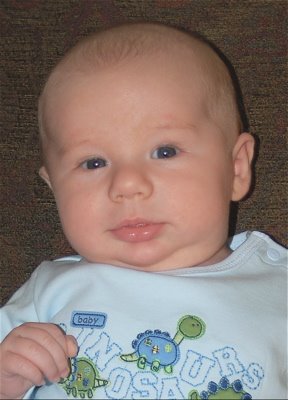
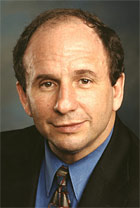 On Wednesday, my friend Barb devoted her blog to the four-year anniversary of the death of Sen. Paul Wellstone ... while I devoted mine to the two-month anniversary of the birth of another short, loud, baldish guy with bright eyes, a smirky smile and the charisma to win the heart of anyone who meets him.
:-)
Friday, August 11, 2006
is there such a thing as a 'just abortion'?
Because my line of work puts me into contact with a variety of points of view on abortion, I've been thinking about — and grappling with — the issue a lot in the past few years. For me, the interesting parts of this thought process have been not so much from the legal perspective but the moral one.
I get very frustrated by the rhetoric on both sides of this debate, and I find myself wishing — aching, in fact — for some intelligent discussion that does not continually revert in a kneejerk fashion to one political position or the other. So I was inspired when I saw this conversation on the Feminary blog. Basically, the Feminarian poses the question of whether, just as there are moral arguments supporting a "just war," there are also moral arguments supporting "just abortion."
It's rare that I hear such intelligent, nuanced considerations of this question from a moral standpoint. Here's what I mostly experience, at least in soundbytes, and it seems to revolve more around the legal question, which seems too black-and-white for such a complex and personal issue:
"Pro-choicers," in their zeal to keep abortion legal and easily available to all sectors of the population (via public funding, for example), refuse to sway from the point of view that it's completely a women's issue, all about the mother and her "reproductive rights," with almost no acknowledgment of another life to be considered. The mother's body is paramount, even if there happens to be another tiny body involved. It bothers me that the question of whether an unborn fetus/baby has rights (not to mention whether a woman, once pregnant, has an obligation to take responsibility for that newly created life) is automatically not up for discussion, and those who raise the questions are derided as "not on our side," as if the "humanity" of an unborn creature is already decided to be less-than, when perhaps there is a legitimate reason to consider that all human beings ought to be considered in the equation.
"Pro-lifers," in their zeal to criminalize abortion, refuse to address the fact that abortion has always existed and always will, whether legal or illegal, and making it go away goes beyond the question of law: It's going to take a commitment on the part of the whole society to better support pregnant women — and born children and mothers and families — even if this commitment requires them to consider more progressive social policies that go against their political grain. Once a baby is born, it seems, they lose interest in protecting it. ("They already have people to protect them!" one woman I talked to kept insisting by way of excusing her single-track focus on abortion.) Some, though not all, seem to lack a full sense of understanding and empathy for the incredibly complicated and personal reasons women have for choosing to terminate a pregnancy.
And on both sides, there are unresolved moral questions about when life actually does begin, when a life becomes viably human enough to have equal rights, whether it is sometimes acceptable to terminate a life. I don't take lightly the Catholic Church's position that all life is sacred, and that, biologically, life begins at conception. Yet I know the church also has rationale for just war, which also takes innocent lives. The church also makes allowances for allowing a sick person to die if the burdens of caring for that person outweigh the benefits. (This is a thorny issue, though, made clear by the Terri Schiavo case last year. Is a strictly biological definition of life worth defending, or does a life cease to become meaningful when it has no consciousness?) And let's not even get started on the division between people who will fight tooth and nail to protect the lives of unborn children yet refuse to support policies against the death penalty or innocent casualties of war. Is only "innocent" life sacred, not all life? So, even within my religious tradition, I struggle.
I find I've been thinking about this on an even more personal level as I carry our baby through this pregnancy. It has been impossible for me not to think of our baby boy as a separate little person whom I must protect as fully and responsibly as if he were living outside my womb. When friends have lost babies to miscarriages, I am excruciatingly aware of the separate life that has been extinguished. That is probably where my moral sense of an unborn child's humanity leans, but I know there are other women whose pregnancies have convinced them even more strongly that a woman should not be forced to go through such an experience unless she fully chooses. And I have to ask myself the tough question: What if we'd found out that our baby was going to have severe disabilities or birth defects that would make his life incredibly difficult for himself and everyone in it? Would I feel the same way? I think all children are precious, and I can't imagine ever terminating a pregnancy, but I've never been in the shoes of someone who has made that tough decision.
I don't have answers. Wrestling with the questions, and listening as much as I can, are the best I can do. And I appreciate the Feminarian's post for helping me think about it in new ways.
I get very frustrated by the rhetoric on both sides of this debate, and I find myself wishing — aching, in fact — for some intelligent discussion that does not continually revert in a kneejerk fashion to one political position or the other. So I was inspired when I saw this conversation on the Feminary blog. Basically, the Feminarian poses the question of whether, just as there are moral arguments supporting a "just war," there are also moral arguments supporting "just abortion."
It's rare that I hear such intelligent, nuanced considerations of this question from a moral standpoint. Here's what I mostly experience, at least in soundbytes, and it seems to revolve more around the legal question, which seems too black-and-white for such a complex and personal issue:
"Pro-choicers," in their zeal to keep abortion legal and easily available to all sectors of the population (via public funding, for example), refuse to sway from the point of view that it's completely a women's issue, all about the mother and her "reproductive rights," with almost no acknowledgment of another life to be considered. The mother's body is paramount, even if there happens to be another tiny body involved. It bothers me that the question of whether an unborn fetus/baby has rights (not to mention whether a woman, once pregnant, has an obligation to take responsibility for that newly created life) is automatically not up for discussion, and those who raise the questions are derided as "not on our side," as if the "humanity" of an unborn creature is already decided to be less-than, when perhaps there is a legitimate reason to consider that all human beings ought to be considered in the equation.
"Pro-lifers," in their zeal to criminalize abortion, refuse to address the fact that abortion has always existed and always will, whether legal or illegal, and making it go away goes beyond the question of law: It's going to take a commitment on the part of the whole society to better support pregnant women — and born children and mothers and families — even if this commitment requires them to consider more progressive social policies that go against their political grain. Once a baby is born, it seems, they lose interest in protecting it. ("They already have people to protect them!" one woman I talked to kept insisting by way of excusing her single-track focus on abortion.) Some, though not all, seem to lack a full sense of understanding and empathy for the incredibly complicated and personal reasons women have for choosing to terminate a pregnancy.
And on both sides, there are unresolved moral questions about when life actually does begin, when a life becomes viably human enough to have equal rights, whether it is sometimes acceptable to terminate a life. I don't take lightly the Catholic Church's position that all life is sacred, and that, biologically, life begins at conception. Yet I know the church also has rationale for just war, which also takes innocent lives. The church also makes allowances for allowing a sick person to die if the burdens of caring for that person outweigh the benefits. (This is a thorny issue, though, made clear by the Terri Schiavo case last year. Is a strictly biological definition of life worth defending, or does a life cease to become meaningful when it has no consciousness?) And let's not even get started on the division between people who will fight tooth and nail to protect the lives of unborn children yet refuse to support policies against the death penalty or innocent casualties of war. Is only "innocent" life sacred, not all life? So, even within my religious tradition, I struggle.
I find I've been thinking about this on an even more personal level as I carry our baby through this pregnancy. It has been impossible for me not to think of our baby boy as a separate little person whom I must protect as fully and responsibly as if he were living outside my womb. When friends have lost babies to miscarriages, I am excruciatingly aware of the separate life that has been extinguished. That is probably where my moral sense of an unborn child's humanity leans, but I know there are other women whose pregnancies have convinced them even more strongly that a woman should not be forced to go through such an experience unless she fully chooses. And I have to ask myself the tough question: What if we'd found out that our baby was going to have severe disabilities or birth defects that would make his life incredibly difficult for himself and everyone in it? Would I feel the same way? I think all children are precious, and I can't imagine ever terminating a pregnancy, but I've never been in the shoes of someone who has made that tough decision.
I don't have answers. Wrestling with the questions, and listening as much as I can, are the best I can do. And I appreciate the Feminarian's post for helping me think about it in new ways.
Thursday, July 6, 2006
putting lay to lie
Monday night, Steve and I watched the documentary Enron: The Smartest Guys in the Room, which follows the rise and fall of Enron, especially focusing on its top guns, Ken Lay, Jeffrey Skilling and Andy Fastow. The movie was fascinating, and it really helped me understand what had been happening inside the company that led to one of the biggest economic fiascos of the century ... so many people losing their retirement savings (including former employees of Portland General Electric, which Enron took over) and the link between Enron and the California blackouts (something I hadn't known before). It's really an incredible story.
So it was wierdly coincidental, not two days later, to see the news that Ken Lay had died. Everything in the movie was still so fresh in my mind that it felt rather ... unbelievable. When it first came across on the news sites, a cause of death hadn't been announced yet, and I wondered if it was suicide. It wouldn't have been the first for Enron, and Ken Lay was probably going to spend the rest of his life in prison. (Turns out it was a heart attack — but was it? The snarky bloggers and conspiracy theorists are already at work, with conjectures like this one: "How about this? Knowing that his assets would be inheritable if he died, the Lay family suggested to their financial genius paterfamilias that he take a pill that would mimic a massive heart attack. Kind of like Frankie Pentangeli in The Godfather Part II. At least that would have shown a generosity of spirit.")
As for my take on Ken Lay and his death, I'm somewhere in the boring middle. He was a convicted criminal, a victim of greed, arrogance, poor judgment or all of the above. He caused great devastation to many people, and I would never defend him. Yet a man has died, and his family is mourning. No matter who he was in life, he's in someone else's hands now, and I don't feel like dancing on his grave. (I would love to be a fly on the wall at his funeral, though.)
So it was wierdly coincidental, not two days later, to see the news that Ken Lay had died. Everything in the movie was still so fresh in my mind that it felt rather ... unbelievable. When it first came across on the news sites, a cause of death hadn't been announced yet, and I wondered if it was suicide. It wouldn't have been the first for Enron, and Ken Lay was probably going to spend the rest of his life in prison. (Turns out it was a heart attack — but was it? The snarky bloggers and conspiracy theorists are already at work, with conjectures like this one: "How about this? Knowing that his assets would be inheritable if he died, the Lay family suggested to their financial genius paterfamilias that he take a pill that would mimic a massive heart attack. Kind of like Frankie Pentangeli in The Godfather Part II. At least that would have shown a generosity of spirit.")
As for my take on Ken Lay and his death, I'm somewhere in the boring middle. He was a convicted criminal, a victim of greed, arrogance, poor judgment or all of the above. He caused great devastation to many people, and I would never defend him. Yet a man has died, and his family is mourning. No matter who he was in life, he's in someone else's hands now, and I don't feel like dancing on his grave. (I would love to be a fly on the wall at his funeral, though.)
Monday, July 3, 2006
for anyone who has dealt with infertility
This includes me, and it includes many women I know, thanks to the strong communities that build up when you share that common bond. If you're reading, I want to tell you about this new blog by a couple who went through it, too. Now they have kids, and they're writing a book about infertility — for friends and family of those who go through it. They're pretty much using the blog as a way to gather material. As they explain it:
Want to know how to tell your infertile friends your happy pregnancy news? ("The best way for me to receive this kind of news is over email and/or the phone, so I can hide my reaction just a little bit. That way I can make it sound happy and enthusiastic while I'm crying.") Want to know why sometimes they decline to attend your baby showers? ("It would just be too embarassing to breakdown crying in the middle of a huge crowd. People don't realize that the crying is not a sign of self pity, but of pain.")
The stories people are telling, in both the posts and the comments, are incredibly moving and real. Every time I visit this site, I find 10 different paragraphs I want to send to 10 different friends. At this rate, I think the book is going to be amazing.
I've listed it on my blog list on the left side of this page. It's called Stirrup Queens and Sperm Palace Jesters. Don't miss it!
We are parents who have made it to the other side of the infertility chasm and we are currently writing a book to help friends and family who have not gone through infertility to understand the emotions and needs of those within the [infertility] community.The blog is geared toward people who have struggled with infertility — in any way, shape or form. It's an invitation for them to tell their stories. And if you're lucky enough to have no problems in the fertility department, it's also a great place for anyone who ever wanted to walk a mile in those shoes.
Want to know how to tell your infertile friends your happy pregnancy news? ("The best way for me to receive this kind of news is over email and/or the phone, so I can hide my reaction just a little bit. That way I can make it sound happy and enthusiastic while I'm crying.") Want to know why sometimes they decline to attend your baby showers? ("It would just be too embarassing to breakdown crying in the middle of a huge crowd. People don't realize that the crying is not a sign of self pity, but of pain.")
The stories people are telling, in both the posts and the comments, are incredibly moving and real. Every time I visit this site, I find 10 different paragraphs I want to send to 10 different friends. At this rate, I think the book is going to be amazing.
I've listed it on my blog list on the left side of this page. It's called Stirrup Queens and Sperm Palace Jesters. Don't miss it!
Wednesday, June 28, 2006
middle-class-apolis
Ray, who stays on top of all things related to urban policy, clued me in to this column from Governing.com about the decline of the middle class in cities.
Tidbit: The most middle-class metro area in America is Minneapolis/St. Paul. The least is New York. Here's more:
Tidbit: The most middle-class metro area in America is Minneapolis/St. Paul. The least is New York. Here's more:
... The Brookings Institution looked at where poor, middle-class and wealthy families lived in 1970 and 2000 in the 100 largest metro areas and in greater detail in 12 selected regions. Big findings: The middle class (defined as those making between 80 percent and 120 percent of a region’s median income) is shrinking in nearly all these places (as it is in the nation as a whole), but the percentage of neighborhoods that can be considered middle class is shrinking even faster. Significantly, this isn’t just an inner-city problem; it’s happening in the suburbs as well. Bottom line: The likelihood that poor, middle-class and wealthy families share the same block is much less now than 30 years ago. And that may have ominous consequences for social mobility, urban investment and regional politics, the Brookings authors add.
Monday, June 12, 2006
no wal-mart organic for me
From The New York Times Magazine last week: One good reason I'll stick to shopping at our local food co-op.
It seems Wal-Mart is going to start selling organic foods at more affordable prices than people are used to seeing. Sounds good on the surface. However, as author Michael Pollan writes:
And what about meat? So-called "free-range" animals that make it onto Wal-Mart's shelves are not likely to breathe much fresh air — or eat the foods they normally would:
Call me a snob — and I don't think I am — but I would rather give up other luxuries around the house and pay more for food than support the industrialization of organic farming.
It seems Wal-Mart is going to start selling organic foods at more affordable prices than people are used to seeing. Sounds good on the surface. However, as author Michael Pollan writes:
"Before you pour yourself a celebratory glass of Wal-Mart organic milk, you might want to ask a few questions about how the company plans to achieve its laudable goals. Assuming that it's possible at all, how exactly would Wal-Mart get the price of organic food down to a level just 10 percent higher than that of its everyday food? To do so would virtually guarantee that Wal-Mart's version of cheap organic food is not sustainable, at least not in any meaningful sense of that word. To index the price of organic to the price of conventional is to give up, right from the start, on the idea, once enshrined in the organic movement, that food should be priced not high or low but responsibly. As the organic movement has long maintained, cheap industrial food is cheap only because the real costs of producing it are not reflected in the price at the checkout. Rather, those costs are charged to the environment ...
To say you can sell organic food for 10 percent more than you sell irresponsibly priced food suggests that you don't really get it — that you plan to bring business-as-usual principles of industrial 'efficiency' and 'economies of scale' to a system of food production that was supposed to mimic the logic of natural systems rather than that of the factory.
We have already seen what happens when the logic of the factory is applied to organic food production. The industrialization of organic agriculture, which Wal-Mart's involvement will only deepen, has already given us 'organic feedlots' — two words that I never thought would find their way into the same clause. To supply the escalating demand for cheap organic milk, agribusiness companies are setting up 5,000-head dairies, often in the desert. These milking cows never touch a blade of grass, instead spending their days standing around a dry-lot 'loafing area' munching organic grain — grain that takes a toll on both the animals' health (these ruminants evolved to eat grass, after all) and the nutritional value of their milk. But this is the sort of milk (deficient in beta-carotene and the 'good fats' — like omega 3's and C.L.A. — that come from grazing cows on grass) we're going to see a lot more of in the supermarket as long as Wal-Mart determines to keep organic milk cheap."
And what about meat? So-called "free-range" animals that make it onto Wal-Mart's shelves are not likely to breathe much fresh air — or eat the foods they normally would:
"Whether produced domestically or not, organic meat will increasingly come not from mixed, polyculture farms growing a variety of species (a practice that makes it possible to recycle nutrients between plants and animals) but from ever-bigger Confined Animal Feeding Operations, or CAFO's, which, apart from using organic feed and abjuring antibiotics, are little different from their conventional counterparts. Yes, the federal organic rules say the animals should have 'access to the outdoors,' but in practice this often means providing them with a tiny exercise yard or, in the case of one organic egg producer in New England, a screened-in concrete 'porch' — a view of the outdoors. Herein lies one of the deeper paradoxes of practicing organic agriculture on an industrial scale: big, single-species CAFO's are even more precarious than their conventional cousins, since they can't use antibiotics to keep the thousands of animals living in close confinement indoors from becoming sick. So organic CAFO-hands (to call them farmhands seems overly generous) keep the free ranging to a minimum and then keep their fingers crossed."
Call me a snob — and I don't think I am — but I would rather give up other luxuries around the house and pay more for food than support the industrialization of organic farming.
Wednesday, May 17, 2006
amen to that
While I still have Mother’s Day on my mind ... I was looking at the RevGals' blog (which I found thanks to another friend's blog) and found this post from the weekend.
Sue, one of the RevGals (a group of mostly clergywomen and other vocation-discerning women who do the blog together) writes:
Of course mothers deserve to be celebrated, although Mother's Day sometimes reminds me of Valentine's Day - hyped-up "greeting card holidays," as Sue writes. The thought of jacked-up flower prices and commercials for diamond earrings just makes me cranky. But if there's going to be a day (and I do admit mine felt pretty nice this year), and if churches are going to take part in celebrating it, there are better ways they could do it. For instance: Let's honor all the people who play out the role of mother in our lives - friends, sisters, brothers, mentors and bosses, even total strangers who came along when we needed them. I love my mother, but I also have been incredibly cared for by people who are not related to me. (I'm thinking of you, Jo Ann.) Women (and men) who have no children at all have been known to nurture others and guide them like the best "moms" we know. (And let's not forget that God mothers us incredibly.)
Besides, if we really want to do something meaningful for mothers, I'd think we'd want to raise real issues: How do we make daycare more affordable? How do we go about establishing enforceable standards to make sure it's safe and decent across the board? How do we give more women access to flex time at their jobs so they don't feel stuck with limited options? How do we make it socially acceptable for fathers to take their full allotment of parental leave and flex time, just as mothers do? How do we make sure all women have access to affordable health care? How do we stop the petty bickering between working moms and stay-at-home moms so we can come up with solutions to these problems?
Sue, one of the RevGals (a group of mostly clergywomen and other vocation-discerning women who do the blog together) writes:
I have some personal issues with the celebration of Mother's Day in churches. It is a greeting card holiday, not a religious one. More important than that, however, is the heartache of the folks in our pews who feel left out of the "aren't Mother's wonderful?" celebration. Not all mothers bring back fond memories, and not all women can become mothers. My policy is that I will not preach on the topic of mothers, but I will add mothers and women into the pastoral prayers.And then she has a prayer, which includes these lines:
God, we thank you for mothers...for those who would like to be mothers but cannot... for those who have lost children through death or circumstances... for the women in our lives who are like mothers to us... and for a better world for girls to grow up to be mothers if they so choose.Amen. As some of the commenters in my Sunday post pointed out, Mother's Day can be painful for many women. Why don't churches get that? Some do, of course. But there are others — and I've been there — that have mothers stand up and be recognized or come forward for roses, the ones who devote an entire homily to motherhood even though it doesn't really tie into the Scripture readings. One woman I know, who has had three miscarriages and one adopted baby taken away because of a legal snafu, says the church community can be a real source of pain when it emphasizes the "gift of children" as "a blessing for good, moral living — the implication being that we must be cursed."
Bless all who gather this day for worship and praise, for we ask it in Jesus' name. Amen.
Of course mothers deserve to be celebrated, although Mother's Day sometimes reminds me of Valentine's Day - hyped-up "greeting card holidays," as Sue writes. The thought of jacked-up flower prices and commercials for diamond earrings just makes me cranky. But if there's going to be a day (and I do admit mine felt pretty nice this year), and if churches are going to take part in celebrating it, there are better ways they could do it. For instance: Let's honor all the people who play out the role of mother in our lives - friends, sisters, brothers, mentors and bosses, even total strangers who came along when we needed them. I love my mother, but I also have been incredibly cared for by people who are not related to me. (I'm thinking of you, Jo Ann.) Women (and men) who have no children at all have been known to nurture others and guide them like the best "moms" we know. (And let's not forget that God mothers us incredibly.)
Besides, if we really want to do something meaningful for mothers, I'd think we'd want to raise real issues: How do we make daycare more affordable? How do we go about establishing enforceable standards to make sure it's safe and decent across the board? How do we give more women access to flex time at their jobs so they don't feel stuck with limited options? How do we make it socially acceptable for fathers to take their full allotment of parental leave and flex time, just as mothers do? How do we make sure all women have access to affordable health care? How do we stop the petty bickering between working moms and stay-at-home moms so we can come up with solutions to these problems?
Tuesday, May 16, 2006
powerful and prophetic
I just have to give a shout-out to this post from the Feminarian. There's so much good stuff here that I can't touch on it all. Just read it, if you're into Christianity, preaching and ritual in any way.
Subscribe to:
Posts (Atom)


